
Herring Conservation & Restoration Society
OUR MIssion
Dedicated to preserving herring populations and their vital role in the marine ecosystem, the Herring Conservation and Restoration Society strives to foster open, respectful, and timely conversations about herring conservation and restoration. Through community engagement, advocacy efforts, and the promotion of sustainable fishing practices, we aim to protect herring habitats and advocate for their conservation.
Image credit: Moonfish Media
Donate now
About Our Society
The Herring Conservation and Restoration Society is a new non-profit dedicated to conserving and restoring local resident herring populations in British Columbia, to bring these important fish back to the abundant levels enjoyed by coastal communities before contact. This is the first organization in the province dedicated exclusively to showcasing the collective local conservation and restoration efforts for herring.
Our goals:
- Provide opportunities for open, respectful, and timely conversation about herring conservation and restoration.
- Promote herring conservation and restoration.
- Run a digital Herring Journal newsletter that showcases herring conservation and restoration research and grassroots efforts and provides updates on commercial fisheries activities.
- Support a moratorium on commercial fisheries to rebuild local populations.
- Present a community response each year during the herring harvest consultation period.
- Push Fisheries and Oceans Canada to produce a herring restoration plan.
- Have community-based, non-industry representatives at the herring harvest planning table.
- Support Fisheries and Oceans Canada’s planned transition away from fish farms in British Columbia.
Donate Today!
Help Save the Herring
The Herring Conservation and Restoration Society is a grassroots organization solely dedicated to protecting Pacific herring and ensuring their abundance for future generations. We believe that through local conservation and restoration efforts, we can make a significant impact on herring populations.
Your donation will directly support our ongoing efforts to conserve and restore herring populations in British Columbia. With your help, we can bring back these important fish to the abundant levels enjoyed by our ancestors before contact.
Let’s work together to make a positive change for our oceans and coastal communities. Your contribution, no matter how big or small, will make a difference.
Thank you for your support.
The Herring Journal
The Herring Journal features the work of herring protectors along the BC coast, along with their successes, knowledge, and recommendations for future action. Our mandate is to provide opportunities for open, respectful, and timely conversation about herring conservation and restoration. We see it as a practical and educational resource, serving communities who love and rely on the herring. We want this newsletter to become a trusted place for finding:
- the latest research from herring researchers and knowledge keepers,
- activities of coastal groups who work on herring conservation and restoration,
- seasonal updates on herring fisheries and fish farm policy,
- guidance and tips for bringing forward comments and concerns to herring managers and decision-makers at Fisheries and Oceans Canada.

Read herring stories
Latest Herring Stories
Location: Esquimalt Gorge Park Pavilion Time: 6:00 PM - 8:30 PM • Monday, September 28 Protect Herring. Defend Indigenous Rights. Uphold Justice in the Salish Sea....
Pacific herring conservation may depend on more than simply maintaining enough fish. "Age structure and diversity of herring populations are essential," says Dorrance...
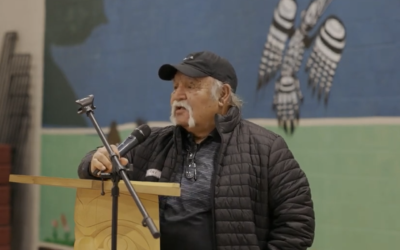
Stz’uminus Elder and longtime fisherman Ray Harris remembers a Salish Sea very different from the one many people know today. “What people don't know is that the huge...
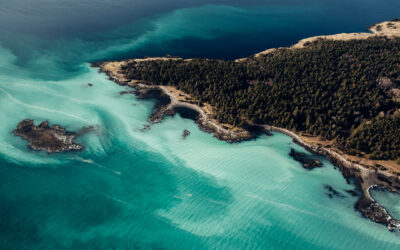
Dear Herring School, It has been a very busy six months for the HCRS (Herring Conservation & Restoration Society) volunteer board and the W̱SÁNEĆ Hereditary Chiefs...
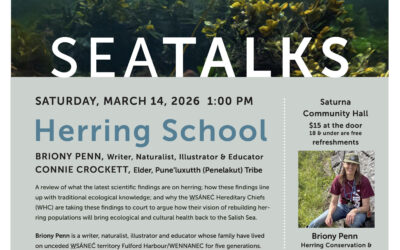
The Saturna Island Marine Research & Education Society (SIMRES) is hosting a Herring School presentation on Saturday, March 14, 2026 at the Saturna Community...
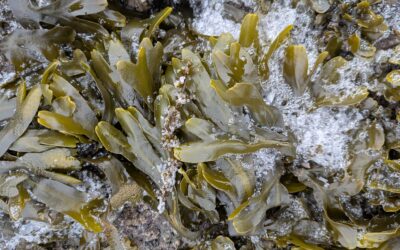
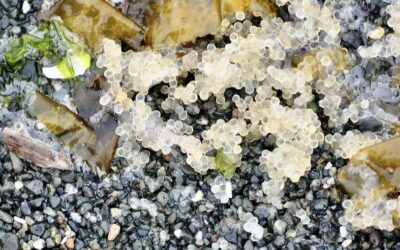
Collishaw Point on Hornby Island had a lovely look but a strange spawn. There was male milt in the water, there was male milt frothed up and laid on all the...
First, a big thank you to all the members and donors who have supported the WHC cause so far. Here is the update and where they are in the process: Just before...
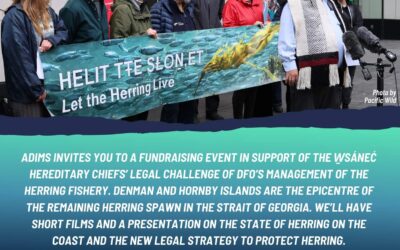
The Association for Denman Island Marine Stewards (ADIMS) invites you to a fundraising event on Thursday, March 12, 2026 in support of the W̱SÁNEĆ Hereditary Chiefs’...
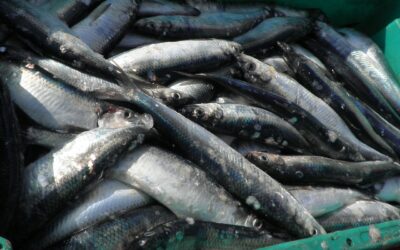
The Food and Bait Fishery is over for this year and it was not as productive as the fishers wanted. They couldn't fill their quota, never a sign that the stock is big...
Our Team
We are happy to introduce you to the Board of the Herring Conservation and Restoration Society!
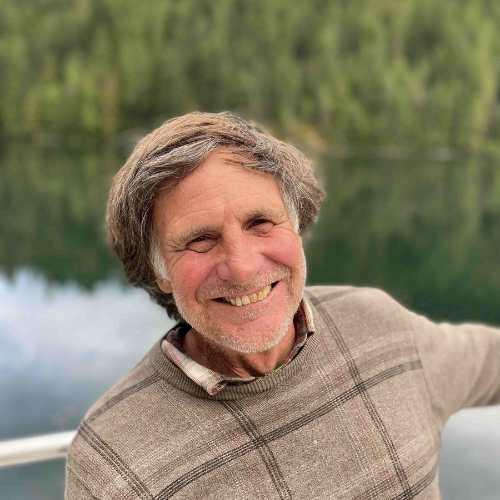
jim shortreed
President
Jim learned to rake herring from his uncle in Pender Harbour and quickly learned Chinook are fat and plentiful under herring. He believes more herring feed more Chinook feed more whales. He believes the only known way to restore herring is to conserve them, so let’s pause the fisheries until stocks recover.
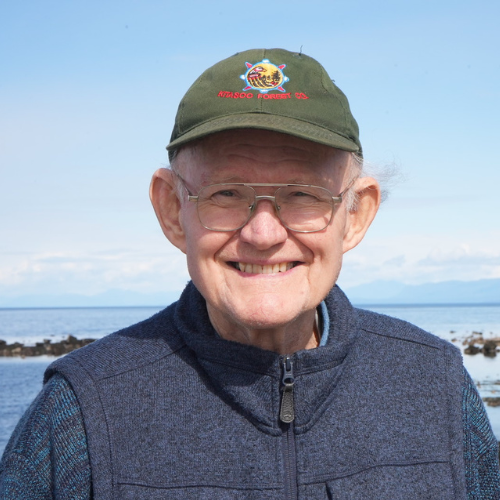
Grant Scott
Vice President
Grant Scott began commercial fishing in 1971 on a small family salmon troller, the Wandelaine, alongside his wife. Over the years, he witnessed a significant decline in most fish populations, particularly herring and salmon. Since moving to Hornby Island, he has been active in educating the public about herring’s importance as a forage fish for all aquatic species and advocated for the closure of the commercial herring roe fishery to aid stock recovery. He has often said it is unbelievable how our Department of Fisheries and Oceans has allowed and even encouraged overfishing. He believes collective efforts are crucial to conserve and revive this valuable species.

Briony Penn
Treasurer
Briony Penn is a fifth-generation islander who witnessed the extirpation of resident herring spawns from overfishing in her home harbour of Fulford in the 80s. Through her work as a naturalist on the coast, an educator in both university and community classrooms and an author and illustrator of award-winning books on the coast and its custodians, she has spoken out against the commercial herring fishery and fish farms for over 30 years. “The only way to stop the silent spring of the coast is to restore herring populations back to the levels that existed prior to colonization.”

Eric Pelkey
Board Member
My Hereditary name is W ̱ IĆKINEM. I am the Great Grandson of Hereditary Chief Louie Pelkey, X̱ETJIMELT, son of SXEDQELÁNEW ̱ I possess the Chief’s cape known as the SX̱EX̱WES that was passed to my father Gabe Pelkey, IYÍEKTEN, by X̱ETJIMELT. The Chief’s Cape, the SX̱EX̱WES was placed upon me at a gathering of the W ̱ ILNEW ̱ people (Saanich, Songhees, Esquimalt, Beecher Bay, Cowichan, Chemainus People), by Grand Chief Sammy Sam and Hereditary Chief Simon Smith Sr, in 2001 at the Tsawout Longhouse at the direction of my father, IYÍEKTEN. QENEṈ,IW ̱ The history of QENEṈ,IW ̱ was passed on to us by our Elders because it deals with the natural laws of the WSANEĆ people. In relating the history and the incidents that brought about the name QENEṈ,IW ̱ . Our Elders told us that many years ago our family had a reefnet site located at SX̱IX̱TE; that was directly across the bay from what is now known as Poets Cove. Poets Cove resort is located on the village site of QENEṈ,IW ̱ . SXEDQELÁNEW ̱ was the Chief of this village until our people were forcibly removed and relocated to Tsawout. QENEṈ,IW ̱ got it’s name from an incident that occurred around the reefnet site located at SX̱IX̱TE; Many years ago that reefnet was a thriving center of the economic life of our families of QENEṈ,IW ̱ . It was to benefit all the people of the village equally. That was the law. There came a time when a powerful SIÁWE (a visionary person who was able read thoughts and see individuals futures), was using her powers for personal benefit. The SIÁWE sought to take possession of the reefnet site at SX̱IX̱TE for her own benefit and personal wealth. She went out to the reefnet site and chased the fisherman away. XAALS the Creator saw what the SIÁWE was doing and came down from the heavens to the people of the village. He bade them all to look at the SIÁWE out at SX̱IX̱TE. A loud roar came from the heavens and a bolt of lightning shot down and struck the SIÁWE and turned her to stone. XAALS warned the people of the village “ Greed is against the laws of the W ̱ ILNEW ̱ people, in order to survive you must share the wealth, none must go hungry. You have all witnessed the consequences. From this day forward this place shall be known as QENEṈ,IW ̱ because of what you have witnessed”!
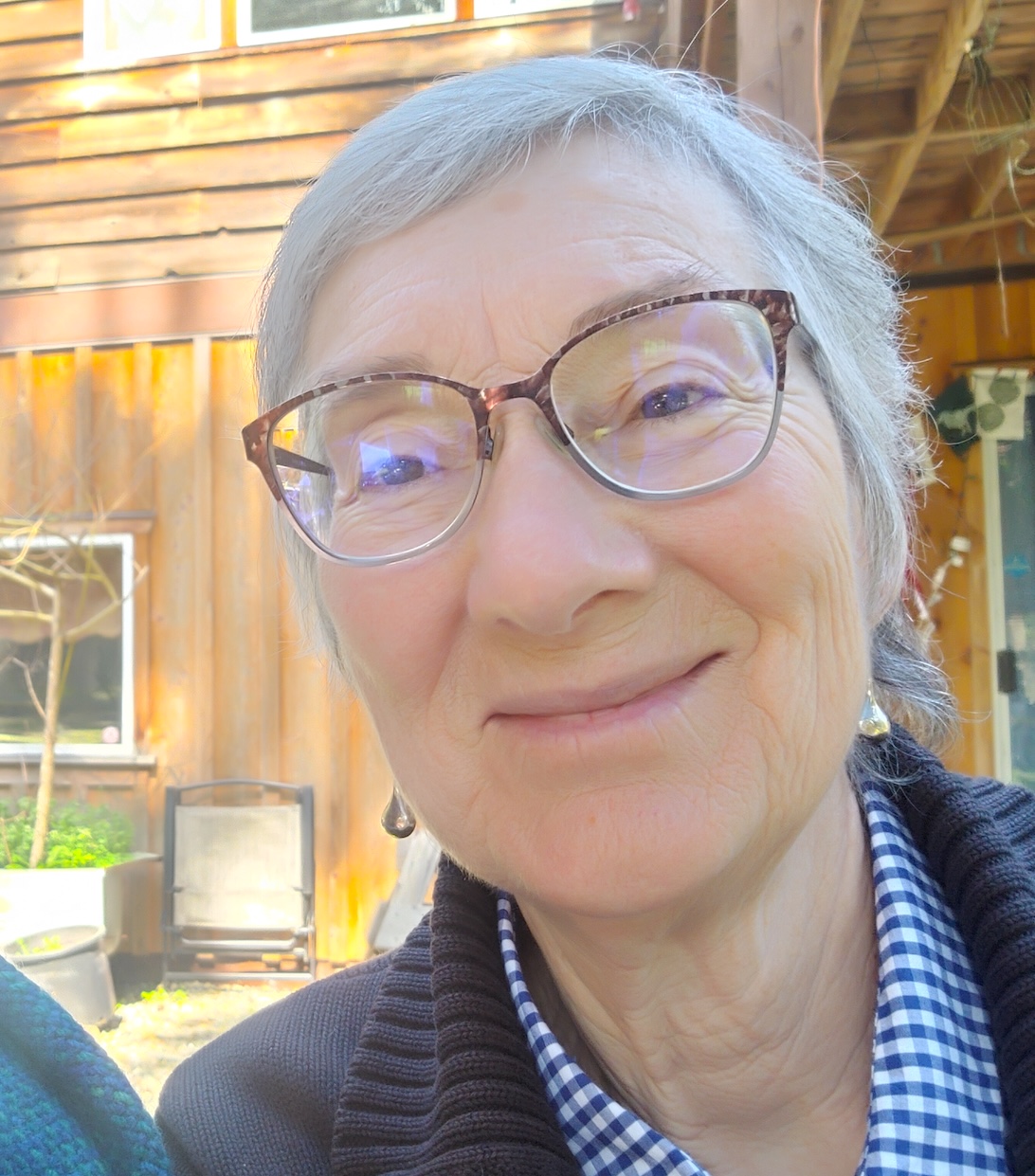
Dorrance Woodward
Board Member
Dorrie was born and raised on the coast, and has lived on Denman Island for most of fifty years. A retired family mediator, she has been active with the Association for Denman Island Marine Stewards for many years and is currently chair. Protecting the herring on this coast is close to her heart.
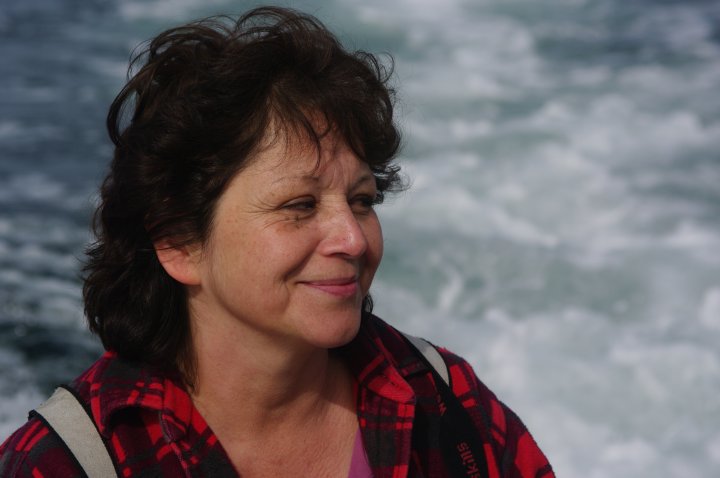
Connie Crocker
Board Member
Connie Crocker (Xwulsiim) is an elder from the Pune’luxutth Tribe and brings a love for the culture and traditions of all first peoples. With more than 20 years of commercial fishing she has a true love for coastal communities and restoring a healthy ocean. Connie has been working for The Kelp Rescue Initiative for the last 3 years and lives in Duncan, BC.
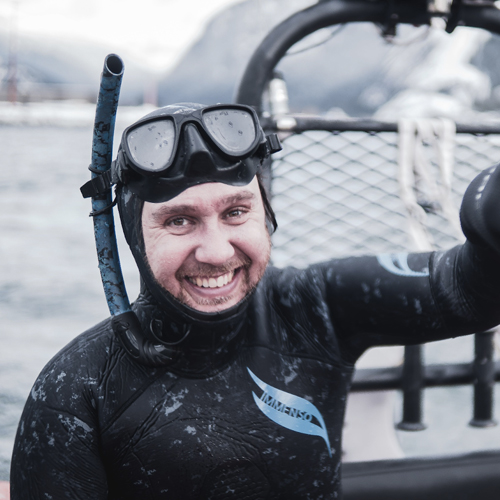
Matthew Van Oostdam
Advisor
Matthew Van Oostdam is a settler and school teacher at St’a7mes School in Squamish, BC. The majority of his time is spent on the land with youth, harvesting salmon and learning from community members. When he is not doing this or riding bikes up the mountains with the menmen tl’a Sḵwx̱wú7mesh mountain bike team, he runs the Atl’ka7tsem Searching for Slhawt’ Program. With guidance from Skwxwu7mesh elders and the Squamish community, Matthew and his friends document the spatial and temporal distribution of herring spawn throughout the northern Howe Sound region. In conjunction with this work, Matthew shares his herring discoveries and other ocean sightings with his students through puppet shows and letters from Harriet the Herring.
Vanessa Minke-Martin
Advisor
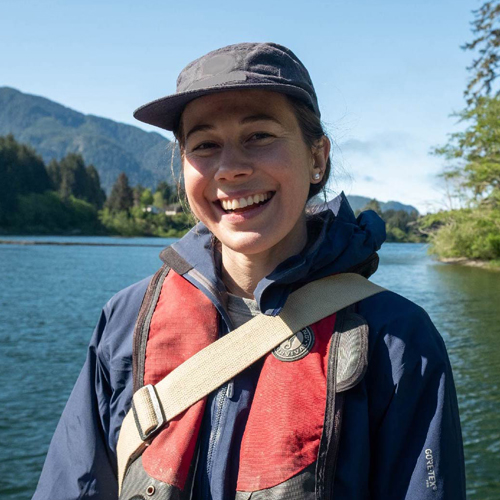
Vanessa Minke-Martin grew up in southern Ontario and is now a settler on Lekwungen and WSÁNEĆ territory. A former fish biologist with a master of science from the University of British Columbia, she has advocated for herring conservation in the Salish Sea for over five years. Vanessa is an editor at Hakai Magazine, where she was shortlisted as a Best Emerging Writer by Canada’s National Magazine Awards in 2023.
Mara Hanneson
Advisor
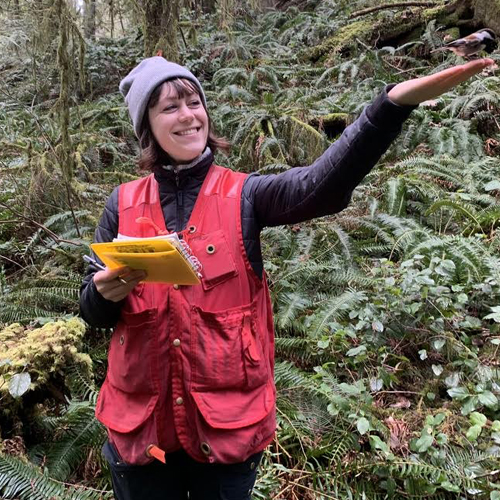
Mara Hanneson was raised on Vancouver Island, the territory of the Lekwungen and WSÁNEĆ, where she continues to live, work and play. She is a student at the University of Victoria, where she is pursuing an undergraduate degree in Biology. When she isn’t studying, Mara spends her time exploring the coast and forests, enjoying the plentiful flora and fauna of the West Coast. As a developing bird scientist, Mara recognizes the conservation and restoration of herring is essential for supporting a multitude of avian species.
Harriet the Herring
Honorary Board Member
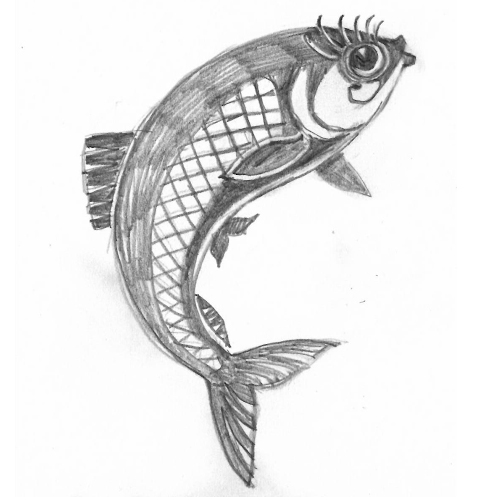
Harriet is a Herring. She is a magnificent fish with big eyelashes who travels throughout the Salish Sea with her Aunty Sata7. If you are lucky, she sends you letters using her shellphone and shares with you the teachings from her herring school. She writes letters to the kids at St’a7mes school and lets them know when the sea lions are in town, who are feeding on the herring and asks them to celebrate the return of the herring with a great feast and gathering to place hemlock and cedar boughs in the water.